Category: Behaviour

  • Not Finishing the Quest

    Not Finishing the Quest

    I do worry that I am not doing more with my life.

    Not more in the way the world usually means it.

    Not more money.

    Not more achievements.

    Not more status.

    There is something in me that keeps pushing toward expression, toward risk, toward the uncomfortable places where growth lives.

    The challenge is that we live in a world obsessed with more.

    More information.

    More productivity.

    More optimisation.

    So it can be difficult to tell the difference between the more that belongs to us and the more that belongs to everyone else.

    How do we know when life is genuinely asking something of us?

    And how do we know when we’re simply responding to pressure?


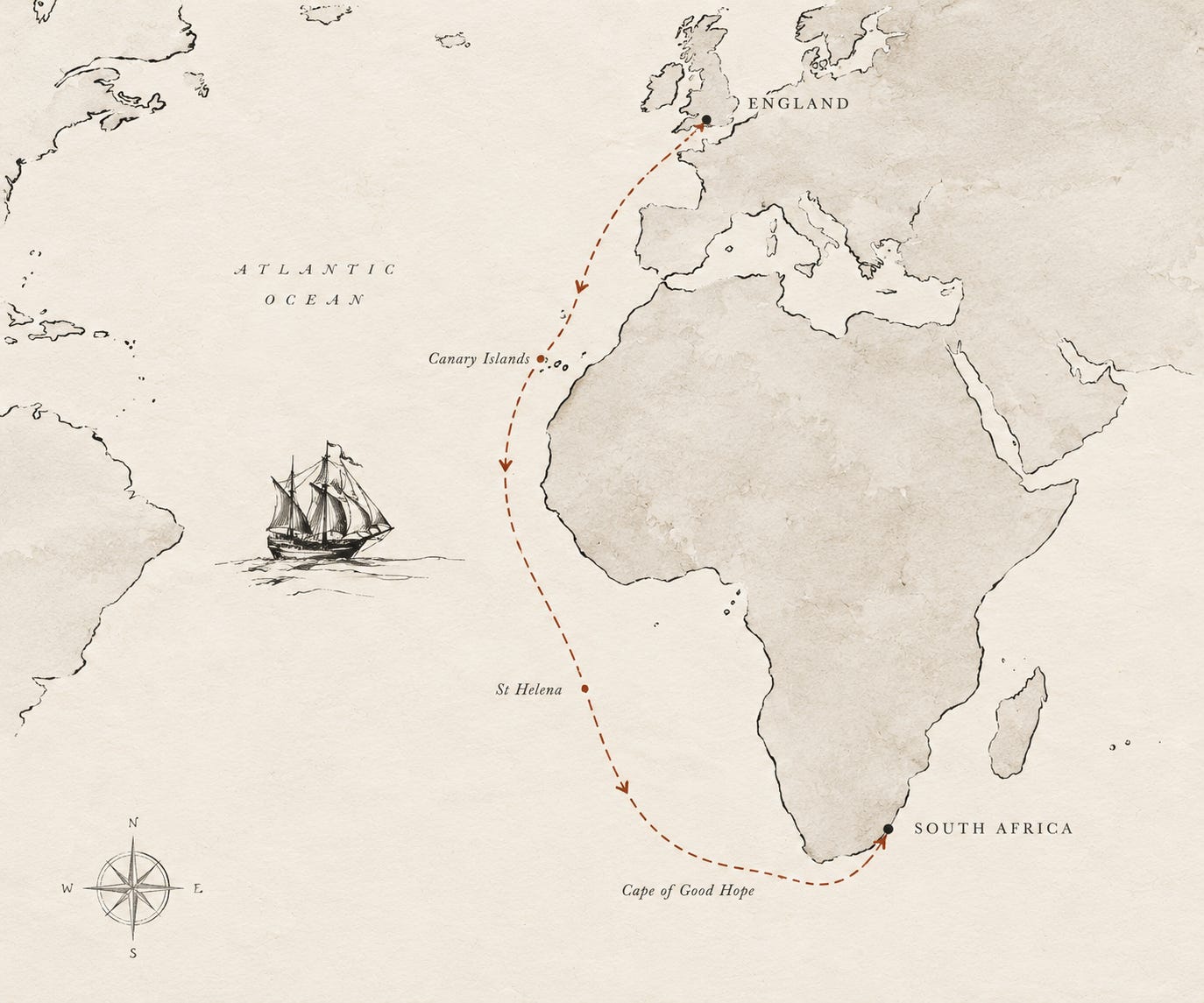
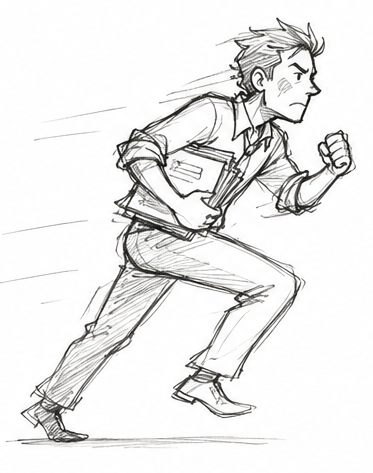
    Many years ago I started doing vision quests in Brazil. I was twenty-nine, and the more inside me was calling me out of my comfort zone and into something that felt like an initiation.

    I knew this more was right for me.

    I needed something that would move me into manhood, into adulthood.

    I may have looked and spoken like a man, but on the inside, parts of me had not yet made that crossing.

    I wanted certainty.

    I wanted confidence.

    I wanted to know that I had what it takes.

    Looking back, I thought the mountain was going to give me something.

    I didn’t yet understand that it was also going to take something away.


    We weren’t allowed plastic—only skins and natural materials. I had made a kind of makeshift tarp with beeswax, which, looking back, was already showing its fault lines.

    At the time I thought it was a problem with the tarp.

    Years later, I realised it was showing me something about myself.

    I had grown up with an absent father and a mother who carried more than she should have had to carry.

    And somewhere in that arrangement, I had learned two things at the same time.

    How to lean.

    And how not to trust that I would be held.

    Those lessons sat quietly beneath the surface of my life for years.

    The mountain was about to bring them into the open.


    On that mountain, the conditions were just right to expose all of this.

    I was the only non-Brazilian. The others seemed completely at home in the ritual, in their bodies, in the land itself.

    From where I stood, they looked like men who belonged there.

    And those old feelings came up again.

    That I didn’t have what they had.

    That I wasn’t ready.

    That somehow everyone else had received a handbook for life that had passed me by.

    And the truth is, I wasn’t ready.

    Which is what made the quest right for me in all the wrong ways.


    There is a community at the base of the mountain. Each person is taken to their own place and surrounded by 365 tobacco prayer ties.

    Once you enter that circle, you don’t leave until the quest is over—unless you choose to come down.

    Morning and night, the community sings for you from below.

    I loved that part.

    Somewhere beyond the trees, people were holding you in their prayers. You couldn’t see them, but you knew they were there.

    And yet, in the end, none of them could do the quest for you.

    It was just you and you.


    I settled in. The first day and night passed.

    The fasting.

    The discomfort.

    The waiting.

    Then the rain came.

    And it didn’t stop.

    Through the second day.

    Into the third night.

    Everything I had brought with me slowly stopped working.

    The tarp leaked.

    The ground turned to mud.

    My clothes stayed wet.

    By then I had dug myself into the earth and covered myself with leaves, trying to hold onto whatever warmth I could find.

    The mountain seemed indifferent to all of it.

    That night was one of the hardest nights of my life.

    Not because I was in danger.

    Because I had run out of ways to convince myself I was in control.


    The next morning wasn’t really a waking. It was just a continuation.

    I was cold. Wet. And done.

    So I went down—one day short.

    I felt like I had failed.

    Not because of the weather.

    Because I had come all this way looking for something, and I hadn’t completed what I set out to do.

    The story I carried about myself felt confirmed.

    Maybe I didn’t have what it takes after all.

    A few days later, I sat with a Brazilian elder.

    She asked me why I had come down.

    I remember feeling almost offended by the question. Had she not seen the weather?

    The rain had been relentless. Everything I brought had failed. I was cold, exhausted and miserable.

    The answer seemed obvious.

    But she looked at me and said:

    Abandonment.

    You felt abandoned.


    It took me years to understand what she meant.

    At the time I thought she was talking about the rain.

    She wasn’t.

    Underneath the cold, the discomfort and the struggle was a feeling I had known for much longer.

    That I was on my own.

    That nobody was coming.

    That if I couldn’t carry myself, I would not be carried.

    The mountain hadn’t created that feeling.

    It had revealed it.

    I was still, in some way, looking for my mother.

    Only now there was no shelter.

    No rescue.

    No one to make it easier.

    Just me.

    And something in me had to cross.

    That, I came to see, was more.

    Not finishing the quest.

    Not proving anything.

    Not becoming stronger.

    But moving.

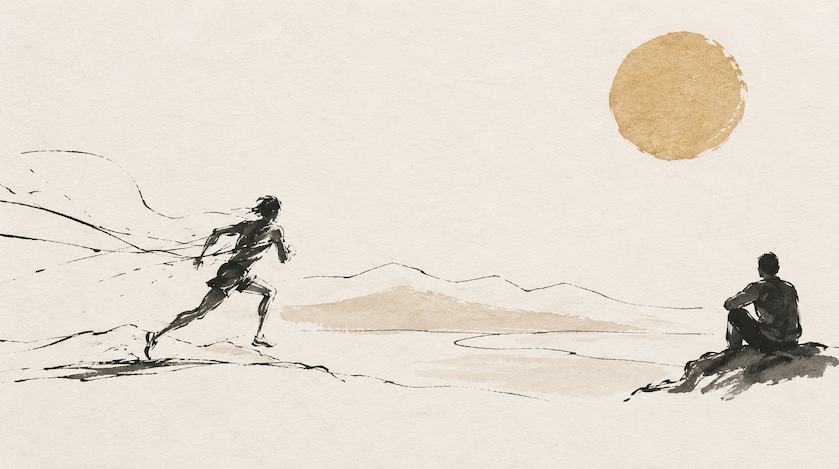
    Moving from dependence to responsibility.

    Moving from waiting to choosing.

    Moving from being carried by life to carrying myself.

    The crossing had already begun long before I came down the mountain.


    That, I came to see, was more.

    Not finishing the quest.

    Not proving anything.

    But moving.

    You can’t do a vision quest every day.

    But the movement doesn’t stop.

    We are always crossing something.

    A fear.

    A loss.

    An old story about ourselves.

    Life keeps asking us to leave one shore and step onto another.

    The difficulty is that we live in a culture obsessed with a different kind of more.

    More achievement.

    More optimisation.

    More productivity.

    More certainty.

    I saw a headline recently: you have two years to upskill yourself or else.

    The “else” carries a threat.

    Fall behind.

    Become irrelevant.

    Get left behind.

    But that is not the more I’m speaking about.

    The more that is ours arrives differently.

    Sometimes it asks something big of us.

    A mountain.

    A relationship.

    A career change.

    More often it asks something smaller.

    A difficult conversation.

    A risk.

    A truth we have been avoiding.

    A single step across an invisible threshold.

    In a world that moves this fast, perhaps the real challenge is slowing down enough to notice what life is asking of us.

    To listen.

    To feel where movement wants to happen.

    And then to take the next step.

    Not because it is clear.

    Not because success is guaranteed.

    But because something in us knows the crossing is ours.

  • If there is no problem with the problem

    If there is no problem with the problem

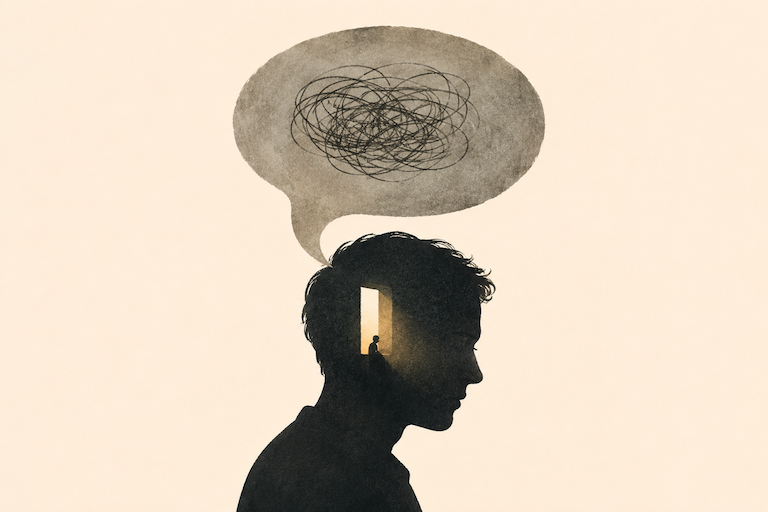
    Fear wants to know. What happens when we stop trying to solve everything?

    There is so much to be afraid of — or is there?

    I feel myself tremendously impacted by the state of the world. Just when you think one war is over, a new one starts.

    Thanks for reading Parts and Perspectives ! Subscribe for free to receive new posts and support my work.

    We were sitting in church on Sunday. This particular church has the feeling that it could hold any religion or spirituality. Michelle, the minister there, holds that principle wonderfully. She is a breath of fresh air.

    It’s not unusual for her to encourage the congregation to imagine their faith without the church.

    What is your relationship with a higher power when everything else is stripped away she would ask?

    I love this question because it challenges us to look beyond the structures, institutions, and people we might feel we need in order to access something bigger than ourselves.

    I think because this relationship with life and mystery is so real for her, so alive, she is able to say it very simply.

    So when she began her sermon, and the war with Iran had recently started, she said.

    “I don’t know what to say about it. But my heart goes out to the people.”

    What a beautiful position in a world full of opinions.

    I don’t know. And I deeply care.

    I found that very comforting.

    This whole week I’ve tried to stay in that place of I don’t know.

    Because the fear can come on strong sometimes.

    And I notice how quickly my mind wants to know.

    To feel more in control.
    To find certainty.

    I can take in too much news.
    Too many images.
    Too much information.

    And the impact is big when fear is in the driver’s seat.

    Fear wants to know.

    Fear doesn’t want us to stay in uncertainty.

    But life has always been uncertain.

    Sometimes it can feel more uncertain than others. But the times when it didn’t feel that way didn’t mean it actually wasn’t.


    I worked with a young woman recently who told me about the horrific images TikTok was showing her — unasked for.

    In some ways I feel lucky to belong to a generation that is slightly behind all of this. I’m way behind on social media. And that also feels like a blessing.

    But for many younger people these platforms have become places where a sense of safety and belonging is built.

    This person told me she wouldn’t know what to do without TikTok.

    What’s strange to me is that we know we are exposed to more than we can handle — and still we reach for the content.

    It’s easy to become out of touch with the fear itself and instead move into chronic problem-solving mode.

    Especially when the world feels fragile and volatile.

    So I wanted to write about fear this week.

    And about working with this problem-solver in us — not against it.

    Without seeking a perfect existence, the question I find myself asking is this:

    What is the right level of fear to experience?

    And how do I know when I’ve moved outside that bracket?


    Loch Kelly offers a powerful invitation.

    He asks:

    What’s here when there is no problem to solve?

    Or perhaps more simply:

    What if there is no problem right now?

    Often something subtle happens when we ask this.

    There is a little more space.

    The breath becomes easier.

    The chest may open slightly.

    Even if you get a moment of this, it’s gold.

    Because you can almost bank on the fact that your system will clench up again.

    But the more references we have to this non-problem-solving state, the more capable we become of addressing the problems that are actually in our power to solve.

    It’s a strange irony.

    Fear often pushes us away from constructive action.

    When its grip is strong, we lose what Michael Meade calls our poetic relationship with life.


    The Tibetan teacher Chögyam Trungpa once said that we live like a bundle of tense muscles defending our existence.

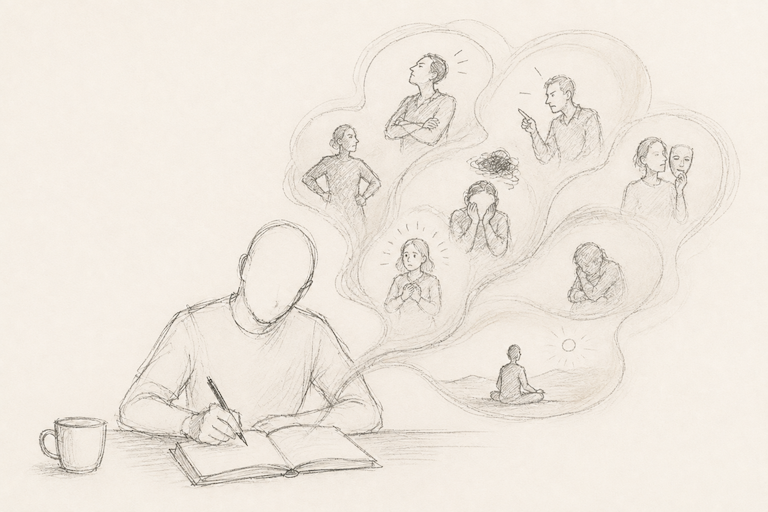
    And when fear is active, the mind begins running its familiar loops.

    What is going wrong.
    What might go wrong.
    How to fix it.

    Judging.

    Obsessing.

    Figuring things out.

    Have you noticed how many moments of the day are spent trying to figure something out?

    Even when nothing actually needs solving.

    If I pause randomly during the day and ask myself what is happening inside right now, I often find something subtle.

    Not exactly agitation.

    But a slightly edgy feeling.

    A kind of background sense that something around the corner could go wrong.

    And when we look closely, much of it revolves around a deep apprehension of loss.

    Loss of the body.

    Loss of people we love.

    Loss of belonging, respect, or identity.

    Somewhere deep down we know that everything changes.

    And something in us tightens in response.


    From a neuroscience perspective this tendency makes sense.

    The limbic system evolved to scan for danger.

    It’s part of what psychologists call the negativity bias.

    If you have one hundred encounters with dogs and ninety-nine are friendly but one bites you, you remember the bite.

    Fear, in this sense, is nature’s protector.

    The challenge is not that we have fear.

    The challenge is that sometimes the fear response gets jammed.

    Instead of responding to real threats, the alarm system begins firing across many areas of our lives.

    Fear takes root in the tissues.

    In our thoughts.

    In our emotional patterns.

    In our behaviours.

    And when we are fully inside that loop we enter what Tara Brach calls a kind of trance of fear.

    Inside that trance we lose access to some of our capacity.


    Sometimes the body itself becomes part of the defence.

    A bundle of tense muscles.

    The mind starts figuring things out.

    Then worrying.

    Then more details follow.

    Thoughts keep the emotion going.

    Whereas emotions in the body often move through much more quickly if we let them.


    But, what if we didn’t have a problem with the problem?

    What would it be like if the difficulties we feel so intensely under our skin were not actually as catastrophic as they seem?

    What if the need to solve them moved into a more creative space?

    The stakes are still there.

    Life still matters.

    But the urgency softens.

    There is more space.

    And maybe, if you did nothing at all for a moment, that might also be okay too.

    Crazy idea, right?

    Because often there is a part of us that will downright refuse.

    If things became that spacious, it might feel like giving up.

    Like weakness.

    Like something dangerous might happen.

    I once worked with someone who said to me:

    “Standing still would feel like going backwards.”

    But slowing down has its own intelligence.

    Slowing down comes with an echo.

    Whatever we have been doing — over days, weeks, months, or years — begins to catch up with us.

    The reverberations move through us.

    There’s really no other way.


    When we begin to contact these feelings directly, we often discover something surprising.

    Fear.

    Fear that has us clenched in ways that once helped us manage what was unmanageable.

    To meet fear directly can feel like a small death to the personality.

    Because in those moments we go against the default operating procedures that have been practiced for so long.

    And yet there is something exhilarating in this too.

    We get to do something different.

    Tara Brach describes this as attending and befriending.

    Listening to the fear.

    Feeling it directly in the body.

    And perhaps sensing the life that sits underneath all the problem solving.


    At the heart of all this there may be a deeper question.

    Can I really be who I am?

    Michael Meade speaks about this as a poetic grasp of our lives.

    Beyond the survival instinct there is also something creative within us.

    Certain things light us up more than others.

    Those are often the very things that put us back on our path.

    To follow that nature asks us to loosen our grip on the identities we built in the past.


    If we truly believe there is a problem right now, what impact does that belief have on our body and mind?

    You might pause for a moment and check.

    Right now, is there actually a problem that needs solving?

    Or is there simply breath, a body sitting here, and a mind that has become very skilled at imagining the next thing that could go wrong?

    Sometimes the more subtle problems carry the greatest weight.

    It shows up as stress.

    Tightness.

    A narrowing of our vision.

    And in that tightening we lose contact with what might already be here —

    support,

    possibility,

    even creativity.

    Things that may have been present all along.

    Waiting for a little more space.

  • Searching for Purpose

    Searching for Purpose

    We had our neighbours over this week. They come from a very different cultural world to ours — they are Zulu.

    I don’t even know where to begin speaking about cultures other than my own. As a white South African with Christian roots, their way of life couldn’t be more different from how I was raised — even though my own upbringing was more secular than anything else. I grew up in an insular home. High walls separated us from our neighbours, and we remained largely disconnected from the people around us in any meaningful way.

    My neighbour Judi (a pseudonym) is one of eleven siblings. She was raised in community. As with anything, there are highs and lows. In her world, everyone knows everyone. Privacy is scarce. Your business is rarely only your own.

    And yet, I’ve always longed for something like that — a felt sense of belonging to a larger whole. Of having many brothers and sisters, both inside and outside of family.

    What I’ve come to learn about myself is that building cross-cultural bridges is something I love. And at the same time, it reliably takes me far outside my comfort zone. I know I’m going somewhere unfamiliar, and it’s not something I rush toward.

    I think this is a built-in feature of purpose: it’s rarely something you hurry into, and there’s no obvious payoff for the ego. Something deeper inside says moveGo there. And it’s hard to explain why you would — except that not going somehow starts to feel more painful.

    In that sense, purpose may be motivated more by pain than by calling.

    At a certain point, it becomes harder to stay comfortable. Comfort itself turns into its own kind of enemy, because somewhere inside we’re longing for something beyond it.

    Oliver Burkeman puts it this way:

    “Resisting a task is usually a sign that it’s meaningful — which is why it’s awakening your fears and stimulating procrastination. You could adopt ‘Do whatever you’re resisting the most’ as a philosophy of life.”


    Life Is Expensive

    Halfway through the evening, Judi said something that stayed with me.

    “You know,” she said, “it doesn’t matter if you have anything or not. If you have food or not. You carry this expensive gift called life.”

    The word expensive stayed with me. Not precious. Not sacred. Expensive.

    It broke the usual chain of haves and have-nots. It cut across circumstance. No matter where we come from, we all carry this “expensive” gift — life — and somehow we can never lose it.

    Let’s name another feature of purpose here: a sense of rightness that arrives without effort, often without choice. Energy moves. Something aligns. And strangely, it feels less like you chose it and more like it chose you.

    And often, what’s choosing you isn’t that sexy.


    Disappearing

    Back in modern life, purpose has become one of the most seductive words of our time. Everyone seems to be searching for it.

    It’s slippery — sometimes present, sometimes gone. I might be sitting in front of a sunset, and suddenly there is no purpose at all. Just light. Just colour. Just being here.

    In those moments, purpose doesn’t feel deliberate. It finds me rather than the other way around. And when it does, it undoes me. There’s no story left. No striving. Just presence.

    Of course, we can’t rely on sunsets to guide our lives. But they reveal something important — not what purpose is, but what it feels like when we touch it.

    This brings me to another feature of purpose, following Judi’s teaching: you disappear.

    When purpose is real, your will doesn’t obstruct something larger. You become more like an empty chair. And emptiness is not easy.

    Feeling full often feels safer. We lean into what we think we know. Into opinions, frustrations, fears, desires. Into other people’s certainty. Into borrowed directions.

    But to encounter purpose, we often have to become emptier than we want to be. Which takes us right back to the beginning: emptiness touches the very thing we most resist. And, as Burkeman suggests, resistance is often the marker of where we need to go.

    I’ve seen this same quality in music.

    There’s a moment when a musician is fully absorbed — when effort disappears. It’s no longer clear whether the person is playing the instrument or the music is playing them.

    Nothing feels performative. There’s no story about destiny or importance. Just skill, presence, surrender.

    Nothing left but the music.

    That feels like the difference between meaning that inflates purpose and meaning that right-sizes it. It’s not big or small — it just is, without story attached. And yet it moves us, quietly shaping a life that feels wider, thicker, more inclusive.


    The Traps

    There is a reward for following the harder impulses. They fill us in ways short-term fixes can’t. But even here, the experience is strange. It doesn’t feel like pleasure in the usual sense.

    And still — who’s to say that going to a movie or sharing a meal with a friend isn’t part of purpose too? Sometimes those are precisely the things we don’t feel like doing — and we lose ourselves in them anyway.

    With that groundwork, I want to name some of the traps.

    We often speak of purpose as if it were a destination — something to discover, claim, and finally inhabit. In spiritual communities especially, purpose gets dressed in colour and ceremony. The shaman on the pedestal. Feathers. Symbols. Mythic language.

    If only I could live like that, we tell ourselves, then my life would finally make sense.

    Purpose becomes something close enough to feel, distant enough to chase. And that chase can become its own form of suffering.

    What’s rarely questioned is whether the way we relate to purpose actually pulls us away from the very thing we’re longing for.


    A Project of Ego

    We live in a meaning-hungry time. You can feel it in the air. Beneath productivity and self-improvement, there’s a longing — and I think it’s a valid one. Who wants to get lost in a world of superficiality?

    Mythologists like Michael Meade speak about soul-level calling — archetypal energies we arrive carrying. The idea that life has a story etched into the soul, something waiting to be lived. I resonate with that. I don’t want to live as if all this is pointless. Even if we never know for sure, treating life as meaningful feels more useful to me.

    And yet, this language can also seduce us. It can start to suggest that only a certain kind of life counts. A magical one. A meaningful one. A life with a clear arc.

    So I find myself wondering about the ordinary.
    The repetitive.
    The dry and unremarkable.

    Could that be purpose too?

    More and more, I notice how easily purpose becomes something the ego puts on. A story of specialness. A promise that the suffering will make sense later. That the discomfort is leading somewhere elevated.

    The ego isn’t the enemy. It’s protective. It wants things to cohere. Purpose gives it that — beautifully.

    And that’s where the trap sits.

    I’ve watched people step into “purposes” that weren’t really theirs. From the outside, you can feel it. They’re doing the thing because they think it will give them status, or legitimacy, or relief. Because it promises power, respect, belonging, or a way to fill the emptiness inside.

    When purpose becomes identity — role, destiny — it gives the ego something to stand on.

    True purpose, as I’m coming to understand it, is actually anti-ego. It keeps leading us to the one place the ego would rather not go. And strangely, that means we don’t have to search so hard.


    What’s Left

    So after all this, what’s left?

    I want to offer a simple working definition:
    purpose is making something with the conditions of your life exactly as you find them.

    Your purpose is to make something out of the material that’s here.

    Or, as Suleika Jaouad puts it, to be creative with your survival.

    It’s alchemy. Looking at your life like a garden and thinking the way a gardener would: What can grow here? What needs tending? What needs time?

    Your purpose is to tend that garden as a gardener would — seeing what needs doing, dreaming about the kind of garden you want to create. And a good garden needs compost. You could say all our pain and difficulty can be that compost.

    Your purpose is to trust yourself to notice the movements — and to follow them. Simple like that.

  • The Embodied Dreamer

    The Embodied Dreamer

    If you’re anything like me, you may feel tired, weary, or even afraid to dream. Disappointments and broken promises — from ourselves or from others — can leave parts of us that would rather not try. That reluctance is understandable.

    The good news is we can meet those parts with curiosity. We can give them space. And we can still dream.

    Even better, the body has an intelligence that can bring the dreamer in us alive.

    The mind, though, doesn’t always trust the body to do the dreaming. The mind wants to stay in control.

    The body knows no control.

    Ram Dass used to say, “Relax. Nothing is in your control.”

    On first hearing, that can sound less like wisdom and more like a nightmare.

    Nothing?

    Of course there is a voice inside that protests. That can’t be true.

    But let’s step into that perspective for a moment.

    What if it were true that nothing is in your control?

    Would you just throw in the towel and call it a day?

    Of course not. No one would. Because it’s actually impossible to do nothing.

    Try it for any length of time and you’ll feel it — the itch, the restlessness, the pull toward movement.

    So “relax, nothing is in your control” doesn’t mean give up.

    It doesn’t mean disengage from life or abandon the wish to be better, kinder, more alive.

    Hell no. If that impulse lives in you, it’s a miracle — something worth safeguarding at all costs.

    But if goodness, or the will to be better, already lives in you, control won’t get you there.

    It’s already happening.

    You didn’t decide to have that longing.

    You didn’t manufacture it.

    All you can really do is follow it.

    And somehow, the body knows how.

    The intelligence of the body is animal, instinctual, visceral, clear.

    It speaks in sensation, energy, intuition.

    The body tells you before the mind when you’re in the company of the wrong people — the sinking in the chest, the knot in the stomach, the uneasy flutter you can’t explain away.

    And it tells you just as clearly when something is right.

    Think of a time you were about to see a close friend, or someone you love.

    The chest opens. There’s space. Warmth. A subtle excitement.

    That’s not thinking — that’s energy. That’s sensation.

    That’s the body speaking to you all the time, quietly pointing out where you’re moving toward life and where you’re moving away from it.

    Which is why, if we’re going to do any dreaming at the start of a new year, it has to involve the body more than the mind.

    The mind has endless ideas — and let’s give credit where it’s due. There’s a great deal of intelligence there, and not something we want to throw away.

    But it’s the body that sifts through what’s actually mine to do.

    The body gives you that felt sense of this is right.

    The mind, on the other hand, can deceive us.

    Thoughts can arrive that sound convincing — even noble — and still be completely untrue.

    Sometimes they’re just fear dressed up as reason.

    Sometimes they’re desire pretending to be destiny.

    The body helps us feel the validity of an idea.

    It moves us out of fantasy and into imagination, where the dreamer in us can take flight, but we still have access to the roots of the tree.

    Feet on the ground, even as we reach into the branches and the deep blue sky.

    Imagination is where real dreaming happens — beyond fear, beyond compulsion, beyond what I’ll loosely call the lower mind.

    Not to shame it, but to acknowledge it. Those lower currents — our grasping, our tightening — can keep the dreaming body bound if we don’t see them clearly.

    So what is embodied dreaming, if we take seriously the idea that nothing is in our control?

    It’s not passivity.

    It’s not doing nothing.

    It’s allowing the dreamer to play in the world of imagination.

    What do you care most about?

    How do you want to feel?

    If there were no time pressure at all, what would still feel urgent?

    Where does your energy want to go?

    If dreaming is in you — and I suspect it’s one of the most universal qualities of being human — then relaxing may actually be synonymous with dreaming.

    The grip of the lower mind loosens.

    The imagination comes online.

    The view widens.

    So relax. And dream.

    Relax, and follow your breath.

    Follow your dreaming body.

    Because if it’s true that nothing is in your control, then it’s not the mind you trust to figure out your life.

    It’s the intelligence in the body — what some of my teachers call the unbroken self — that knows the movements your life is quietly asking you to make.

  • How to Spot Personality on Holiday

    How to Spot Personality on Holiday

    Want to know someone’s (or more importantly, your own!) personality pattern?
    Watch them on holiday.

    When structure drops away, patterns show themselves—how we rest, control, avoid, pursue, organise, or disappear. Personality becomes especially visible when nothing needs to be achieved and no one is watching.

    If you’re familiar with the Enneagram, you’ll recognise these as nine common patterns. If not, read them simply as familiar ways humans organise themselves when routine falls away.

    Here’s a light, imperfect guide to how these patterns often show up on holiday.


    The Improver

    Has opinions about how the holiday should be done.
    Researches in advance. Notices inefficiencies.
    Relaxes only once everything feels “right.”

    Tell: Corrects the Airbnb host in their head (or reorganises the kitchen).


    The Helper

    Makes sure everyone’s okay before checking in with themselves.
    Organises meals. Packs extras. Feels most relaxed when needed.

    Tell: Says, “I’m fine,” while doing everything.


    The Achiever

    Turns rest into a project.
    Best beaches, best photos, best use of time.
    Holiday becomes something to optimise—or document.

    Tell: Still checking email “just quickly.”


    The Romantic

    Feels the longing underneath the beauty.
    Wants the holiday to mean something.
    May feel disappointed if the feeling doesn’t match the fantasy.

    Tell: Says, “It’s nice… but something’s missing.”


    The Observer

    Needs space from togetherness.
    Enjoys quiet, books, walks, museums.
    Energy is carefully rationed.

    Tell: Disappears for a few hours and comes back restored.


    The Loyalist

    Tracks logistics, safety, and backup plans.
    Asks questions. Anticipates what could go wrong.
    Relaxes once risks feel managed.

    Tell: Knows where the nearest pharmacy is.


    The Enthusiast

    Chases options, freedom, and pleasure.
    Doesn’t want to miss out—or slow down.
    Avoids boredom and heavier feelings.

    Tell: Already planning the next stop before arriving.


    The Challenger

    Takes charge when things feel chaotic.
    Protects the group. Pushes through obstacles.
    May struggle with slowing down or showing vulnerability.

    Tell: Says, “It’s fine, we’ll sort it,” and does.


    The Peacemaker

    Goes along with the plan.
    Doesn’t want to rock the boat.
    May genuinely forget what they want entirely.

    Tell: Says, “I’m easy,” and genuinely means it—sometimes losing track of their own preferences.


    When You Notice the Pattern

    So you’ve spotted yourself in one of these. Now what?

    If you catch yourself thinking, “Ah, there I go again,” pause there.

    Often the next thing that appears is another part—the one that wants to fix, judge, improve, or make the pattern wrong. See if you can notice that part too, without letting it take over.

    Once you’ve noticed the pattern from a place of compassion, most of the work is already done.

    Something may soften.
    You might even start smiling—or laughing—at how familiar the move is.
    “Of course. There you are.”

    That friendliness matters more than changing anything.


    Gentle Experiments

    From there, the holiday can become a low-stakes laboratory—not for self-improvement, but for gentle experimentation.

    You might try:

    • If you usually plan—leave something unplanned.
    • If you usually take care of everyone—let yourself receive.
    • If you usually disappear—stay a little longer.
    • If you usually push—pause.
    • If you usually avoid—turn just slightly toward.

    Not forcing or fixing or trying to do it “right.”

    And if nothing changes at all, that’s okay too.

    Being able to see yourself with kindness, especially when structure falls away is already a form of rest.

    Presence over perfection.

    For more reflections like this, insights, and interesting experiments, you can subscribe at nineways.substack.com.