Category: Mindset

  • The Art of Beginnings

    The Art of Beginnings

    Aren’t these early moments of the year a little hard? I’ve lived through 46 of them so far, and to me, they feel like when you were a kid, running alongside a roundabout to build speed before jumping on to glide. I don’t know how much gliding there will be this year, but I know I need to get on the wheel.

    Yet, in these early moments, parts of me feel like they just don’t want to go. They resist what’s here and what needs to be done, offering an assortment of reasons for their reluctance. One of the most valuable lessons I’ve learned so far is not to fight the resistance. That doesn’t mean going along with it either. It’s about being curious about these parts that may not feel ready yet.

    Take this story from my beginning: I was born early, and back then, it was fine for doctors to schedule deliveries. My mother’s doctor was also an avid golfer, and, as ridiculous as it sounds, the story I was told is that my arrival had to work around his golf schedule. For the longest time—and still, to some extent—I’ve carried this feeling of not being ready, like I’m being rushed out the door without everything I need. You know that sense, like you’ve forgotten something important? Granted, there were likely other experiences that contributed to that feeling, but nonetheless, it was there—something my rational mind could not explain.

    The only way I’ve come to understand my resistance is by listening to those parts, making space for their fears, and, most importantly, finding the “hell no, I won’t go” energy in my body. The body carries that resistance, and trusting it is what has helped me move forward.

    So here we are at the beginning of a new year. The first step, if there’s resistance, is to honour it. Once its grip loosens a little, there’s space for dreaming.

    If this year could be more, what would I want that more to look like? Will I dare to dream, even when so much of the world feels torn apart? Even wealth doesn’t insulate like it once did. Look at the tragic fires in LA. The wealthiest among us aren’t immune to natural forces. Sure, it’s always been that way, but doesn’t the world feel more uncertain than usual?

    So, with all the uncertainty, what is worth dreaming of?

    I don’t have a clear answer to that, but I love the question. I think life is meant to be an art form, even when times are shaky. What’s the point of slogging through this thing without feeling some choice in how we respond to the conditions of our lives?

    This brings me to my second point: don’t take it too seriously. After reflecting on last year, my slogan for this year is to be more playful in the serious business of life. For me, that means taking life seriously enough but also recognising its dream-like quality. The stakes aren’t always as high as I think, and there’s plenty of reason not to treat it as life or death.

    One of my heroines is Suleika Jaouad. What I love about her is how she took an impossible situation—cancer—and turned it on its head. Enduring countless hospital stints that left her isolated for long periods, she responded in the one way she could: creatively.

    She started The Isolation Journals, bringing people together through writing and art. Her story reminds me how to dream in a grounded way. It’s not about ignoring life’s constraints or pretending we’re limitless. She lives with uncertainty, not knowing how long she has, yet she finds a creative response to what life brings.

    In Suleika’s case, she lives with the knowledge of her mortality as an absolute truth. That should not be different for any of us, and yet we are experts at pretending otherwise. For Suleika, the knowledge clearly propels her into her deepest place of creativity. She’s not writing like there will be a string of next days or years, but at the same time, she’s not giving up hope for a long and fruitful life. My favourite words from her are utterly simple: she invites us to “let our survival be a creative act.”

    On the face of it, maybe that doesn’t look like much, but when you really consider what she is saying, it challenges us right to the core. We have hundreds of millions of years behind us of being conditioned for safety. Not much in us wants to risk all that in the name of Art. And it’s certainly not to say don’t take material reality seriously. But is there a way you could loosen up a little more and make more space for what really matters to you?

    No challenge comes risk-free. Failure and loss are inevitable—no one in history has been an all-time winner. More to the point, are you in the game?

    I used to think being in the game meant being entrepreneurial or avoiding corporate life. Not anymore. I’ve realised that you can summon creative energy in any situation. Take Viktor Frankl, for instance, who found meaning even in the most horrific conditions. He showed us that, even there, we have a choice in how to respond.

    Because we are storytellers, whether we like it or not, we’re hardwired to make meaning from experience. So the question is, will we wrestle enough with experience to find a way of telling our story that supports the direction we want to take our life in?

    If point two was to dream, then three is to find the story you want to tell that supports the dream. Not the story on the outside, but to grapple with the stories on the inside. If I’m telling myself a story of not being worth anything and that I have nothing of value to give, no matter how hard I dream, my thoughts and beliefs will keep holding me back from stepping more fully into life.

    That’s part of what allows this creative energy to take hold. When we are telling a story that resists reality, there is no movement. We don’t feel that creative possibility. It’s only when we accept the conditions as they are. And if I imagine that I am living in a universe that wants us to dream, then I naturally open to that “more” I otherwise might not see.

    And finally, point four: energise the dream by remembering that we each will have a dying moment. Memento mori, as the Stoics say.

    Sam Harris offers a great proposal for the year: live it as if it’s your last. It’s a familiar idea, but what if we really brought it closer? None of us knows how long we have. Even as I write this, a part of me thinks death is far away.

    Isn’t that crazy, that we can feel like it’s something abstract, when the reality is that it is very tangible and physical? One moment you’re in a body, and the next moment, you’re not. In my bones, I just don’t see how that’s possible. That you or I could just end in entirety. Surely not. Life can’t die, but it can change, and the end of your body-mind is as significant as it gets.

    We should surely use this knowledge for good—not to take for granted what’s in front of us. To remember that something in us wants to live beyond the confines of our patterns. I call that Dreaming.

    And I wish you a good dream for 2025!

  • Remembering

    Remembering

    To remember implies that there’s something we’ve forgotten—and this is often true. Being alive is synonymous with forgetting. In fact, you might say we’re born not just to remember, but also to forget.

    In moments that are too overwhelming, forgetting can become a refuge. It’s a survival mechanism—a way of pushing out what we cannot process in the moment. This ability, in many ways, keeps us sane.

    Aldous Huxley described this beautifully after taking an experimental dose of mescaline. He recounted how life-changing it was to see how much of reality the mind filters out. It’s easy to believe we see the whole picture, but this is never the case. As Anaïs Nin said, “We see reality as we are.”

    Yet, there are moments when we experience a sacred pause—moments that allow us to take in more than we ordinarily would.

    Huxley called this expanded awareness the “Mind at Large.” In that state, the mind operates without filters or preconceptions. It’s wide open to life as it is, revealing beauty in the simplest of things. During his experience, he noticed details—the colours, shapes, sensations, and sounds—that would ordinarily be lost in everyday consciousness.

    He said he would have been more than happy not to be anywhere else for a very long time. And that’s the practice: learning to rest in this place of being and be more in the remembering than forgetting.

    Just as we can open to what is here in the present, we can also turn this curiosity toward the past. And as we do, just like Huxley, we might see things in our past that were previously invisible to us.

    The Ghanaian symbol Sankofa depicts a bird flying forward while looking backward. It means “to go back and fetch it,” reminding us of the power in reclaiming lessons from the past. It invites us to honour our history, carry its wisdom forward, and create a future rooted in self-awareness and connection to our origins.

    Our most creative and empowered responses to life come from acknowledging and digesting what lies behind us—the difficulties and despair, as well as the joys, connections, and gratitude. To have a healthy relationship with the past is to come to a place where we can say, “I accept it as it was.” And it’s a continuous process—always beginning, never ending—just like any other relationship. Past doesn’t change but our relationship to it can.

    Part of this process is recognising how much we’ve pushed out—how much we’ve forgotten that might do us good to remember. This faculty of remembering is just as essential as the one of forgetting.

    If we don’t acknowledge what we carry from the past, we can’t fully access our creativity or live in meaningful connection with the present. The act of remembering allows us to reclaim these pieces of ourselves and weave them into a fuller, richer experience of life.

  • Dreaming the deeper dream

    Dreaming the deeper dream

    This will make it 3 of 3 and I know in writing this I am also leaving out  a whole lot that could be included. That’s the nature of this creative project, it always involves loss. You give it all  and there are bound to be mistakes, ways I could have said it better. 

    One of the most important lessons I learn from my quest is to appreciate water.  In my every day, it is too easy to take for granted. On the 8th day I am given a 1.5 L  bottle of cold water. Eight days behind me without a drop except for the medicine tea on day 5 but water is different.  The satisfaction arrives as it touches my lips. My state is instantly changed, water gives me the feeling of life.  My inner spring fills,  I think how a plant must feel after a dry season.  I  don’t need much of anything, I feel that in my being. It’s enough right now, I am enough right now. Life happening and thank goodness water is part of it.

    The water prayer in the  West (on the medicine wheel)  is about surrender and it reaches into the last 4 days of integration. I am visited twice  by the support team on day 8  for the water prayer and again on day 10 which takes me through to the 13th day, where the quester is ‘harvested’. I think anyone who completed a quest will wholeheartedly agree that this last day is a an emotional one. The feeling that overcomes me when I see my support walk towards me for the last time is a mixed bag, relief, joy, even sadness at the finality of it.  

    Back to the story. I thought I  may be in for some smooth sailing after the water days. They were anything but and perhaps the most challenging of all. This time was characterised by incredibly vivid dreamscape, bearing in  mind that lucid dreaming is now a very normal part of my sleep. I climb up a notch or two in my dreamtime leading me to this experience I am calling ‘the deeper dream’.

    It is the dream that invites me to let go of all control and meet my fear in a very real way.  It’s not the kind of experience one can get ready for. The preparation I needed was these past days and the building of trust in the ground beneath me.  Intellectually, I know about my deeper fear. A central theme is not counting for something or not being seen or included. Going there though is a different story.

    This is how it went – I am plunged into my dream to  visit a teacher of mine that I have worked with for many years. He himself taught and received many  a lesson in dreamtime. In the dream he delivers a clean and swift blow to my ego.  A group of students are sitting around him. He captures our imaginations as he always does with wild stories and all the charisma emanating from his shaman heart. My heart is beating so loud it could explode with excitement. It feels like this is what my life was made for. I know  he is going somewhere soon.  I remember he said something about it but the details aren’t clear. I also know it could happen any moment so I must be ready.

    There is a part of me in the background that is also secretly waiting for a special invitation, something that acknowledges our bond and sets me apart from everyone else. It never comes.  Making matters worse, I am mid sharing something in the circle that feels important to me. It’s not that he is not listening, rather his attention is on something much bigger. My little story appears to be insignificant in the moment we are in. He does not give it any attention whatsoever. I don’t come close to finishing. I am ignored.

    In what feels like a flash he stands up and announces he is going on a special assignment. Being the one he is, it’s the kind of once in a lifetime project brimming with meaning and purpose. Just the kind of thing that appeals to my need for significance. Moments like these feel like they carry the antidote for everything in  me that feels void of  meaning.  There is nothing else I would rather do. This is my burning desire. Yet when the times comes, I am too slow and the three places are taken.  I don’t know how they go but they go. They may have left on a magic  carpet for all I know.

    A void remains. I feel an emptiness I may have been avoiding for lifetimes.  Ignored, rejected, abandoned. Here I am in what feels like the worst that could happen.  My  heart is broken.

    In the next moment I wake up, it still feels so real, my heart aches. I am certain that it happened.  I look around,  its early in the morning. The light is starting to break the night sky.  I see a leaf  connected to a branch.  I feel  a deep relief, it was just a dream.

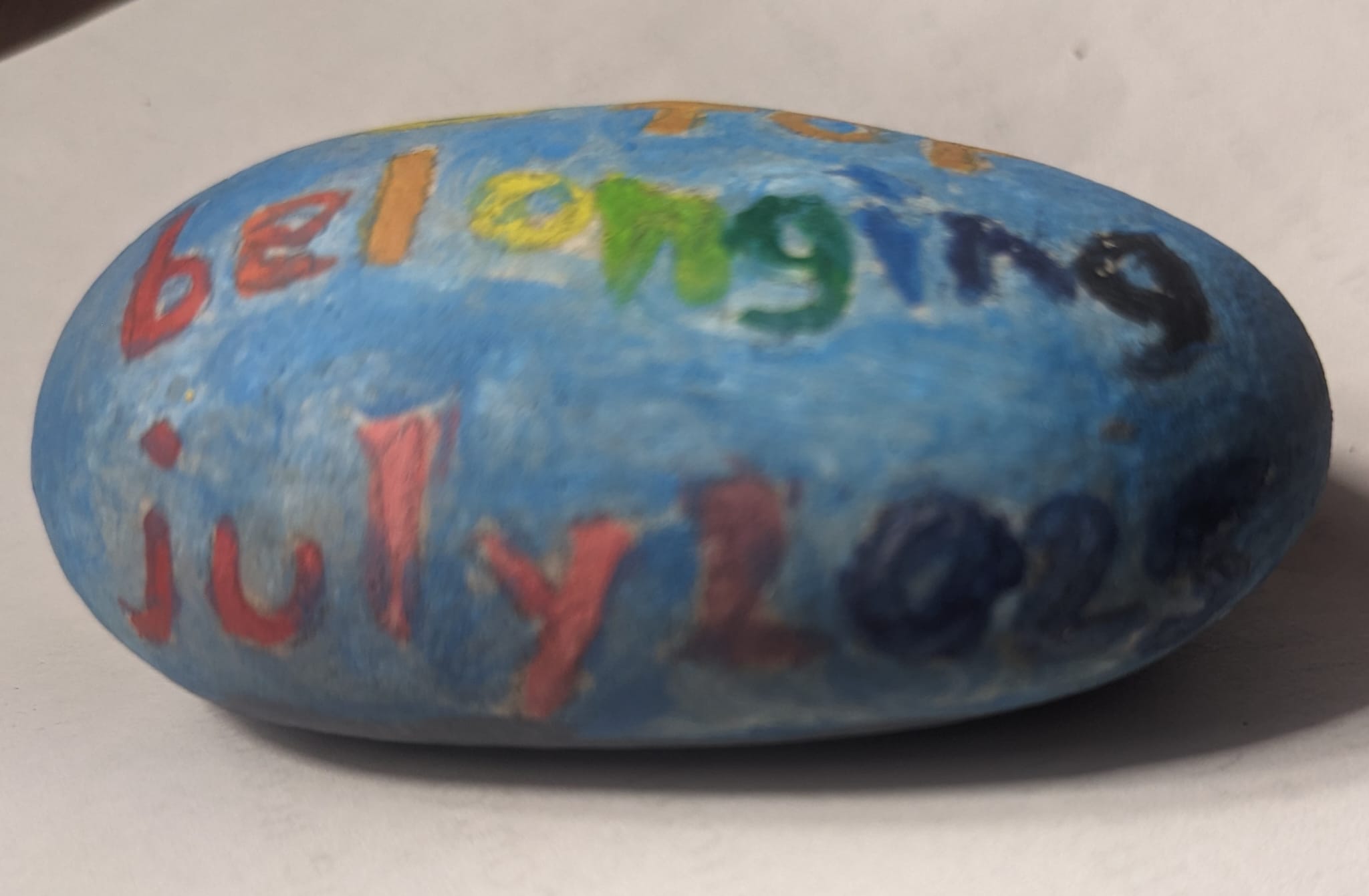
    The thought comes. I am that leaf, maybe I fall from  the tree but I never lose my belonging.  I come from the tree, I am always a part of the tree, no question. Even my deepest fear can never change that. At the most essential level  I am always apart of life and life takes me in. All that remains is thank you.

  • Acceptance runs deeper than words

    Acceptance runs deeper than words

    So much of my ideas around time revolve around doing things. This meeting or that activity measured in certain amounts of time. I put aside time to do things and then fill it with actions.  On vision  quest all those channels are removed.  My experience of time itself changes. Most of it is noise.  When I sit with myself for any extended time I see that clearly. Most of it is different kinds of noise, little of which matters or has much bearing on reality. But my attention is trained in a particular way so put me in social context and watch me run. I run myself as if I were in control, in the illusion of thinking I am the pilot.  Who am I kidding, I am little more control of myself than I am the weather.  The difference is it appears like I am and I have society behind me telling me that I have this thing called free will. That’s a topic for another conversation. Suffice  is  to say that I don’t see anything free about  my will as long as it’s at the whim of my conditioning. The freedom I find on  the mountain is precisely because of the constraints.  That intelligence moves me beyond my predictable patterning.

    This part of my writing then I am calling –  grappling with my story.

    The structure of the quest is broken into 4, 7, 9 and 13 days.  You complete one and move onto the next the following year.  The 13 day being the quest that integrates the entire process. You go through all previous quests and then add another 4 days on just to make sure you get it.  What is one getting? many possibilities but for me the most pressing, I need a lot less than I think I do. In fact needing nothing at all can produce the most ecstatic states.

    The essential self is the ground of acceptance. Without it there is little hope for acceptance because the ego is very simple and predictable by nature. It either doesn’t wants or does. In either case, resistance is at the core of experience. Resistance to losing what I have or to having what I don’t want. In either case, the underlying tone is  discontent. Freud called it ‘normal misery’. I don’t think he is was far off. In this  mode of push and pull, I need an awful lot of control.  The quest is a way of ripping the band aid off.  Giving my ego very little of what it wants, all I need do is witness my own dismantling. 

    This is what catalysed the journey of acceptance.  Up  the notch of discomfort,  take away the usual distraction and see what’s there.  How am I? this is where it gets fascinating because from the outside, there I am sitting there looking like probably not much happening.  From the inside, another reality all together. Thoughts like flies are my constant companion. They can be agonising,  calm, sometimes insightful, memories, imaginations and projections and whatever else. Thankfully mind  does quieten  in nature. 

    ….    Humility – day 1 to 4  – colour Red – element Fire – direction East

    The first 4 days the prayer is for humility. I  have to accept the fragility of my body. I am dying slowly.   I feel the absence of water more than anything.  It is an incredibly physical journey on the level of bodily sensations. The dry fast puts me face on with my instincts.  There is a fight  in me. I feel like a wet cloth being rung out.   I wake up with the first light, a whole day ahead of me without water. The first day passes with relative ease and the second arrives before long. It’s a good feeling have these days behind me because I’m in it now.   On the 3rd and 4th day I experience waves of thirst but also longer  periods of  calm.

    I am on my back a lot. Sometimes I find myself  in foetal position finding  solace in the holding.  Every posture has a cycle and I sense myself coming to the  end  of one and moving into the next.  One of my favourites is on my back with my legs up on  the side of a tree.  I feel so much support from the tree as the soles of  my feet find  a place on the bark. As if tree speaks through my feet, telling me I am a part of this nature. I  love this feeling of feet  connected to tree. Even better when the sun finds my body and warms me to my bones.

    My days are spent in only a handful of different positions and there is some routine. The end of one leads into the beginning of the next. From my back I sit up. many people ask me if I meditate. I never meditate because the quest itself is one long meditation. There is no getting away from it, mind follows. Each moment is a choice of presence or distraction. I sit up,  not meditating, just sitting. Everything else is the same, mind heart body continue as they did  when I was on the ground. 

    I enjoy the sitting but this too will give way into a new position like squatting.  Squatting too feels good for a time and then I am on my back again, this time I may stretch.  From there I walk around my space, or just stand for a while. And those more or less are my movements for the duration of the quest. I find a rhythm in them, there is a comfort in each one because they contain a beginning and end. Similar to a story, mind relaxes  in story, finds an orientation in story.

    My thirst peaks on day 2 and into day 3, thereafter I am in a fasting state punctuated by longer periods where strangely the thirst disappears.  I am left needing nothing, a welcome feeling.   4 nights pass and I am visited by the support team around midday . It’s a welcome sight, knowing that relief is imminent.   I always have the thought that If I can do the first 4 days then I can do anything that follows.  But the painful emotions, the ones I spend my life avoiding can feel harder than not having water.

    ….    Will  – day 5 to 7  – colour Yellow – element Earth – direction South

     On day 5  to 7 the prayer is for will. These are  the prayers set within the tradition we work within. My will as it connects to universal will, remembering purpose beyond my personhood. What am I here for, what is mine to give.  My experience of this time is usually a clearing ground for whatever I pushed aside  that stands in the way of me listening to life. My fear, insecurity, worth, resistance to life come into view.

    My palette is clean and my body is ready to receive every last drop of nourishment. I have to ration my fruit to about 2 pieces a day but before fruits, tea. This is the sacred sacrament of peyote. Just imagine how ripe you are after 4 days to receive this medicine. I  know little else that feels as healing to the body, mind, spirit. My cells feel like they are  in an ecstatic dance.  I am incredibly thirsty so take in more than half the 1.5 L allocated.

    I am in heaven. It  is a strange transition to be on the other side of thirst. Will comes when  I relax, when I open to an intelligence beyond myself.  This new phase of the quest helps me with that by putting me in relationship with my condition in very real way.

    Our conditions are complex, multifaceted and connected to past. Who knows how many generations back. I carry the stories of my ancestry.  They are alive in me,  both strengthening  and weakening forces. I am spun into the whirlwind of everything that I am and have been. The project at hand is coming to terms with the version of myself I have become.

    I am cast back to a young boy. I know this boy but have not fully embraced him. I wish he had done it differently as I imagine who I would be now had he been able to stick it out at karate.

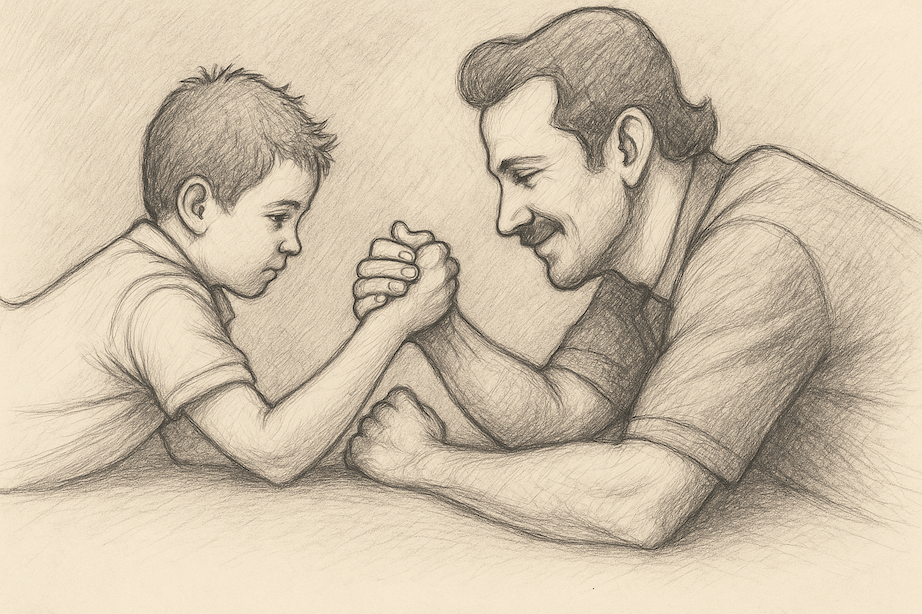
    I feel angry with my dad because the story I am telling is that he let me quit. He should have shown me a way through rather than back away from challenging. He didn’t. That’s the father I had. There is more fight  in me.  Maybe I’m even angry at God, how could it have happened this way. Aren’t I supposed to be someone else.

    I say acceptance runs deep because the things I need to accept are almost always rooted in the past. I have to feel what that boy felt, remember what his life was like. He needs compassion. It’s too easy to think that little guy should have done it differently.

    The hard part about accepting the choice to quit was accepting all that came after that. Accepting  the implications to my life,  how this would shape me all the  way through to present day.

    Only with hindsight’s view do I see the unfolding story.  When I take the perspective of that young boy, I see the truth of the choice  that he made. To him with everything he had at his disposal, the life that he had lived up until then all culminated in that being the best  he could do.  I find a way of softening with him, seeing him. Accepting him just as he is. I think of the pain of excluding him.

    There is  no middle ground when it comes to acceptance. To accept life is to take it as it is, no argument. Those choices start the sketch of the character I will become, the major themes that will play out, the backdrop to my life.  Accepting the little boy in me and respecting his choice to quit puts me in relationship with all the versions of myself that would follow.  They too needed kindness and understanding. They all had their reasons. I must become even more  intimate with my story, finding a way  to love everything that has come before in my life, and the lives before me.

    Accepting my life as it is then also accepting the inevitable archetypical journey that I step into by incarnating. From there novelty can emerge. What an opportunity in that, to do it differently in ways that count not only my own life but all that I am connected to.

    Next and last post in this series – Blessing of water and dreaming the deeper dream

    Credit to Joe Flemming for the feature image.

  • Vision quest part 1 – Introduction

    Vision quest part 1 – Introduction

    When I first heard about a vision quest, I was young. It sounded like a terrible idea even though I knew it was a respectable thing to do. I mostly feared that I wasn’t  made out of the right stuff to undertake such a journey. In the end, it took me 13 years to complete a series of 4 quests.  I had to redo my first and then took space between quests to build up  my will.

    A vison quest really is a strange thing. Even now when I think about it just sounds too far out. You mean you just sit there and do nothing for all that time.   What on earth  could be the point.  There are no formal teachings,  no new knowledge,  no nothing at the end of it not even a certificate to validate your achievement.  Truly, the  ego doesn’t get much on this one. So what is the point and that’s something I’d like to answer  in a few parts. This then is part one, an introduction to my quest.

    Firstly to say that I am so grateful for all the support I received not just from the bottom of the mountain but from friends all over that gave me the strength to  go do this. This is the essence of ubuntu, the deeply felt sense that I am because we are.  I exist within culture, community, family, friendships, relationships. For much of my life the idea of community felt far away. I errored in the opposite direction. My story went something like  I don’t need anyone or at least don’t want to need anyone. I aimed for fierce independence which got me nowhere quickly.  

    These years of vision questing have healed so much  of that. Even though I sometimes felt overwhelmed by the support I received,  I needed it the most this time and felt a growing comfort in being  able to relax into the arms of community. That’s the beauty I think,  that we all get a chance to do this for one another in this ebb and flow of giving  and receiving.  It has been a time of receiving support and I think this alone was incredibly healing for me. 

    One of the first insights I received came early on when 13 days felt like an eternity. Even when it gets really tough, a little voice told me, don’t wish this time of nothing away.  The first 4 days without food and water are always challenging for me and this quest was no exception.  I think the difference was that I wished it away less. I was able be with the extremes of thirsts more than usual, more curious about my bodies response then afraid. As for the rest of the days, I’ll get to that. For now to say the theme of staying with the entire process, beginning to end was the most prominent of all.

    To say a few things on the practical side. The actual vision quest space is small, about 15 sqm and you have nothing to entertain you, not even a pen.  One of the things I’ve noticed is that it feels natural to want  to be as comfortable as possible. And why not try. On a vision quest however, the bar for comfort is dramatically lowered. You accept that many of your moments won’t be comfortable ones.  It’s a case of do what you can then let go and this is an ongoing process.

    I notice one day for example that I could move a branch for more shade, or change the angle  of my tarp so that the rain runs off better. It feels good to evolve things and equally as good knowing the limitations. I’d say overall I have got a lot better at finding and making improvements in my space, working with the setting as well as possible. In that way I see it a little bit like a substitute for scouts training that I didn’t do much of in my youth. I have learned to value this line of practical intelligence so much. It has always been my weaker hand, and as Marcus Aurelius would say, its a good idea to develop skills that don’t come naturally or the ones we neglected in some way.

    Next  post – reckoning with my story. Acceptance runs deeper than words.