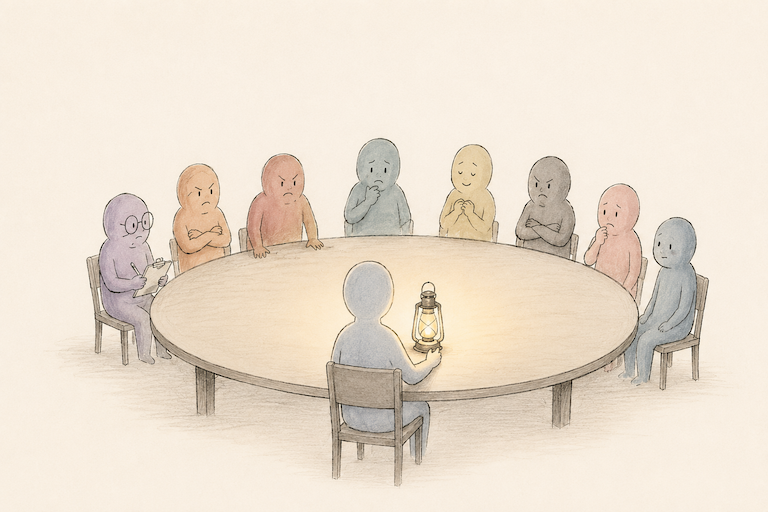
The characters you may not even know are there, each with their own view of the world and their own ideas about what you need.
We all have an inner world populated by different voices.
Some encourage us.
Some comfort us.
And some criticise us.
Over time, these critical voices can become so familiar that we mistake them for who we are.
Internal Family Systems (IFS) offers a different perspective.
Rather than seeing these voices as flaws, it understands them as protective parts—Inner Critics that developed over time to help us survive, belong, succeed, or avoid pain.
Each one is trying, in its own imperfect way, to keep us safe.
The work is to become curious about them, understand what they’re protecting, and build a different relationship with them.
Here are seven common Inner Critics you might recognise.
The Crusher
“What’s wrong with me?”

The Crusher believes there is something fundamentally wrong with you.
It uses shame and harsh self-criticism in the hope that if it points out your flaws first, nobody else will.
Its intention is protection. Its impact is shame.
The Perfectionist

“Is it good enough?”
The Perfectionist believes your worth depends on getting things right.
It is always refining, improving and correcting, hoping that perfection will protect you from criticism or failure.
Its intention is excellence. Its impact is never feeling finished.
The Controller

“Can I keep everything under control?”
The Controller believes uncertainty is dangerous.
It stays one step ahead by planning, organising and thinking through every possible outcome.
If everything is controlled, perhaps nothing painful will happen.
Its intention is safety. Its impact is rigidity and anxiety.
The Taskmaster

“Am I doing enough?”
The Taskmaster believes your value comes through productivity and achievement.
Rest can feel uncomfortable because there is always something more that could be done.
Its intention is growth. Its impact is exhaustion.
The Underminer

“Do I have what it takes?”
The Underminer expects disappointment before it arrives.
It encourages you not to try too hard because that feels safer than risking failure.
If you don’t hope too much, you can’t be hurt too much.
Its intention is protection. Its impact is self-doubt.
The Guilt Tripper
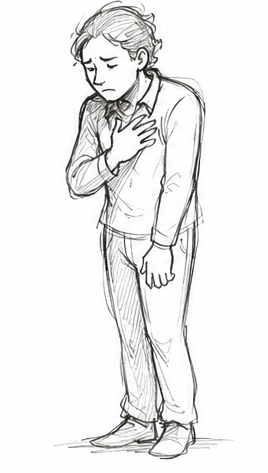
“Am I letting people down?”
The Guilt Tripper believes your needs should come second.
It keeps you motivated through responsibility and guilt, convincing you that saying no or choosing yourself makes you selfish.
Its intention is care. Its impact is guilt and resentment.
The Chameleon
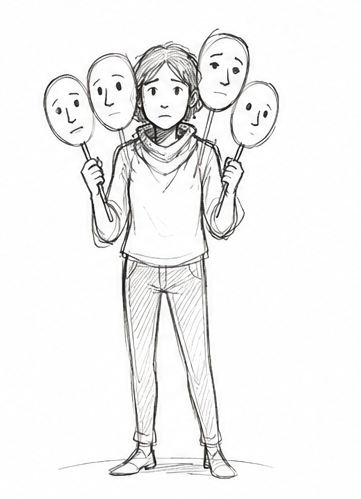
“Am I who I’m supposed to be?”
The Chameleon adapts to fit the expectations of others.
It believes you’ll be safer, more accepted and more loved if you become who other people need you to be.
Sometimes, in trying to belong, you lose touch with yourself.
Its intention is belonging. Its impact is losing yourself.
A Different Relationship
These characters are not your identity.
They are protective strategies that developed in response to your life experiences.
As we begin to recognise them, something changes.
Instead of believing every critical thought, we can pause and simply say,
“Oh… there you are.”
That small moment of recognition creates space.
And in that space, curiosity begins to replace fear.
The goal is to understand these parts.
Because beneath every Inner Critic is a part of you trying to protect something precious.
Which character do you recognise most?
Most people recognise more than one.
We each carry our own unique Council of Critics, each with its own fears, beliefs and protective strategies.
The first step is simply getting to know them.
The more we fight these voices, the louder they often become. The more we understand them, the less they need to shout.
Curious to Learn More?
Recognising your Inner Critics is only the beginning.
In my Parts on Paper journalling groups we take time to meet these protective voices with curiosity rather than judgement. Through guided journalling, reflection and shared conversation, you’ll begin to understand where they came from, what they’re trying to protect, and how to relate to them differently.
The goal is to know them well enough that they no longer have to run your life. To become less identified with them and more connected to the calm, compassionate presence that Internal Family Systems calls Self.
Whether you’re drawn to exploring this work in a group or one-to-one, I’d love to hear from you.
Next Steps
Join my mailing list and receive the Council of Critics Assessment together with your personalised report.
A 5–10 minute reflective assessment inspired by Internal Family Systems.
→ Join the mailing list & receive the assessment
Continue the Journey