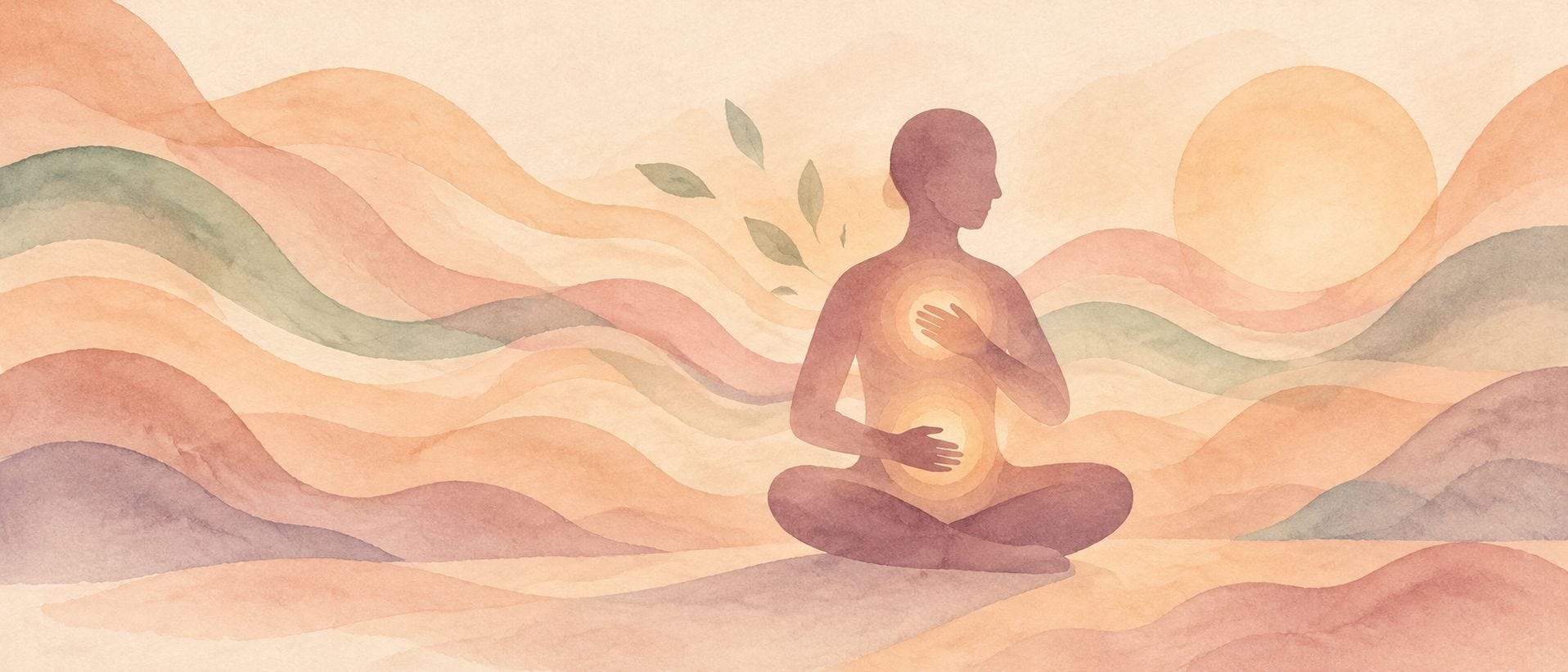
I remember hearing a meditation teacher a long time ago say something about attention. My ears pricked up. Something about the word attention was so appealing. I think it was one of those moments where someone points out something utterly obvious, while at the same time so easily overlooked.
I knew I possessed such a thing, but I didn’t know how to harness it. Little did I know that I would keep thinking about it from that moment on.
First of all, it’s your attention. Not in the way we usually conceptualise ownership. As long as we’re living, breathing, conscious beings, we have this capacity.
And the second point is that, because it’s something we can’t really lose, the better news is that we can learn to direct it more. In fact, there’s a strong argument to be made that it’s all we really can control – what we give our attention to.
Of course, this is a lifetime project. Our attention will be pulled away from us in a myriad of ways. Have you seen the world we live in? Some of the brightest minds in the world have engineered algorithms that appeal to the brain’s reward systems.
Hell, in a way, give up the fight! We already lost. I don’t think this is the worst place to start because we can be a little more realistic about what is actually achievable. Here I am arguing for micro-moments that compound over time.
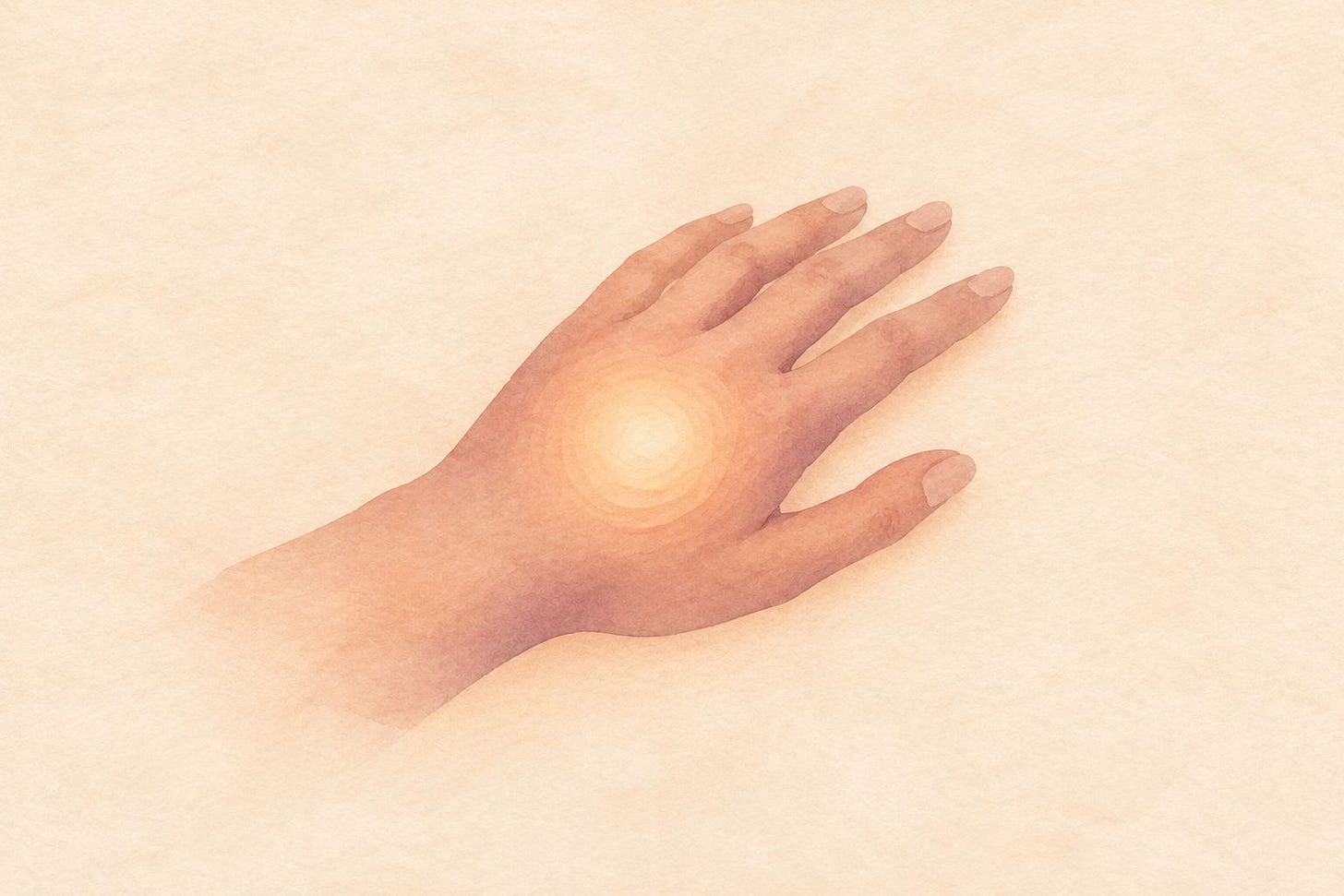
This was what that meditation teacher was saying. Notice that you can move your attention. I could say to you right now, “Move your attention to the back of your hand,” and, like magic, it’s there. Somehow, you are suddenly feeling the back of your hand.
But why does this matter? So what if I can feel my hand?
As AI becomes increasingly capable, I find myself wondering what remains ours to cultivate. Perhaps it’s our capacity to experience, to notice, to feel and to make meaning. We are storytellers. We think, act and remember through stories. The quality of our attention also determines how we make meaning of things.
Say I have a knot sitting at the pit of my solar plexus that makes me feel super anxious. By not paying attention to it, I’m left with a very limited understanding of what it’s about. I’ll default to the story in my head: I wish it wasn’t there. It sucks the joy out of my life. It stops me from working.
These things may all be true, but I’m making meaning from an idea about my experience rather than from the lived reality of it.
When I spend time with that energy in my solar plexus, it begins to tell me something. As I stay with it, I may find thoughts, pictures, images or other sensations in the body that are connected to it. Before long, I may even move closer to its origins, and the meaning becomes much richer, all because of attention.
Attention brings information. The longer you stay, the more you may discover.
There’s a fancy word for this that I quite like: interoception.
It’s what happens when attention moves inside, into the field of the body. We become aware of sensations – temperature, pressure, tightness, weight, pulsation.
And we can, and probably should, build a vocabulary for this.
Every time we can name something in the body, we’re building that language.
Before we had the words, we might not even have known about that empty-pit feeling in the solar plexus, or the sinking feeling in the gut, or the weight in the chest, or whatever it is.
We need words for these things because they help us connect to the experience of them.
And the more we’re unwilling to experience something, the more resistance we may be exerting against it.
In a way, we could be pushing back simply by shutting off from it.
And it’s attention that gets us there.
Isn’t it interesting how much of the time we are paying attention to almost everything except the thing that’s actually asking for our attention?
We can be the opposite of attentive. Elsewhere.
Something else has our attention, and if you’re like me, you can get lost in it. I open Instagram for a second and five minutes later I’m still watching a tennis video.
I lost my attention. Or something took it. Both can be true. I gave it, and something else took it.
Something more consequential happened last month. I stopped meditating for longer than I have in years. For most of October, I went without my 22-minute sit first thing in the morning.
There were good reasons for the break, but none of them really warranted the complete stop that followed.
What interested me more was the effect, which I only noticed when I picked up my practice again earlier this month. I couldn’t believe how much harder those first few sits were. My mind was all over the place, and my attention followed. I had lost some of the sense of holding my attention.
Instead of meditating, my days had started straight into work and studies. The cost, I began to realise, was a backlog of sensations, thoughts and emotions that I hadn’t been paying attention to.
But did they go anywhere?
Without attention, nowhere, really. Perhaps they move to the periphery, but they’re still there, waiting to be noticed. Undigested material, accumulating in the background of my psyche.
Only attention seems to lighten the load.
If last month taught me anything, it was the importance of beginning my day with attention on my own terms. Before the work, before the studies, before the demands of the day start pulling me in different directions.
Sit. Breathe. Pay attention.
I notice more how much of my attention goes towards things that aren’t particularly nourishing over the longer term. There is an effect here. I give my attention, and energy follows.
Noticing where my attention goes can be a game changer. As soon as I notice, something shifts. I see where my attention is, and a little more choice becomes possible.
I can bring it somewhere else.
But what do I bring it to? For me, the most obvious and commonly overlooked place is the feet. I can always depend on my feet being on the ground. I can put my attention in my feet and notice the connection to the ground. There is a feeling that comes with that. We can receive something there, maybe.
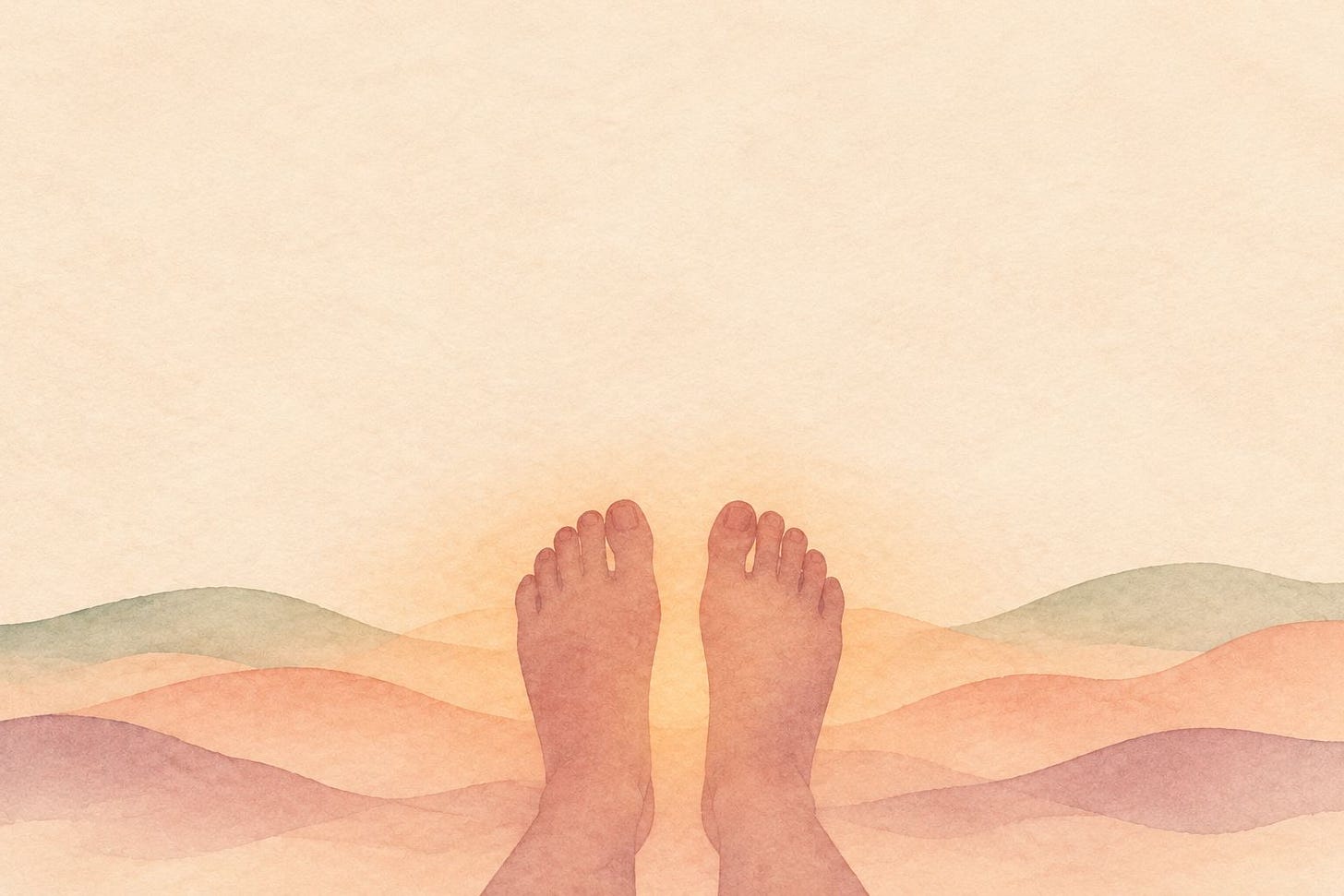
You might even stay for a while. Keep noticing these feet that so easily get taken for granted.
Just feet.
But also, how amazing to have these feet, and to feel this connection to the earth. It’s a good place to start, or to come back to, when attention gets lost.
I might also bring attention to the breath, just noticing how I am breathing. Soon enough, I start to see my shoulders are clenched up, or my jaw is locked, or any number of things happening in the body that have slipped outside my awareness.
This, to me, is what training our attention looks like. We train attention even when we stay for a moment in the body and hold it in one place.
Attention stays, and so do we.
As we stay, the body has a way of finding its own movement towards regulation. We don’t need to do anything other than follow. We stay, listen, and sometimes that invites a movement that helps the body regulate itself.
One of three things tends to happen as we stay with something in the body: it feels worse, it starts feeling better, or it stays more or less the same.
The practice is to allow any of those possibilities without immediately trying to change them. Sometimes a sensation feels more intense before it settles. Sometimes it softens. And sometimes nothing much changes at all.
We stay curious. We listen. We follow.
It seems like more is possible when we’re everywhere all at once, but perhaps that’s a fallacy we’ve bought into as a culture. We believe we get more done when we’re everywhere all at once. But sometimes we find the movements that are right for us only when we slow down.
Slow down to speed up, as the saying goes.
We can bring our attention anywhere in the body. We can also bring it to something outside ourselves. I might let my attention rest on a flower, noticing its colours, its shape, the way the light falls on it. Holding my attention there for a moment is an expression of choice.
The body is one place to practise because so much of our experience is reflected in our physical sensations. As we become more familiar with moving our attention around, particularly towards sensations we tend to avoid, we may become more comfortable staying with ourselves.
We get to know these places. We make space for them.
And it all starts with attention.
So how do we train our attention? First, notice where it goes. Then practise holding it somewhere for a few moments during the day. You might bring attention to your feet, your breath, or a sensation in your body.
Remember that you can move your attention, too. If something feels uncomfortable, you don’t have to force yourself to stay with it. You can move towards something that brings a sense of comfort or calm.
It’s sometimes just as hard for some of us to stay with pleasant sensations. But as we get used to resourcing ourselves by staying with calm or neutral sensations, we can return to the more activated energy and touch it for a moment. Peter Levine, founder of Somatic Experiencing, calls this pendulation: moving back and forth between what is calming and what feels more charged or activated in your system.
That’s also why it’s a practice. You develop your own relationship with attention. You know for yourself when it’s on the right thing.
Here’s a Tiny Habits practice you might try. Pair this attention practice with something you already do every day. It could be brushing your teeth, the moment the water from the shower touches your skin, or when you sit down at your chair.
Pick just one action. When I do this, I’ll take 30 seconds to bring my attention to what’s happening in my body.
What’s it like? What do I notice? Can I resist the urge to fix or change anything? Can I just stay for a moment?
That’s it. Thirty seconds. No big commitment. Just a small moment of attention, repeated over time.
And when you get distracted, as you inevitably will, you can simply begin again.
And then, just as it is in meditation, as we find ourselves lost in thought, we begin again.
We got lost. We return. There need not be a story in that.
A companion resource
I’ve put together a resource called The Language of Sensation, a collection of words and prompts to help you develop a vocabulary for what’s happening in your body. Find it here.